
Your food can only taste great with good quality ingredients
AI writes adequate code now. Great code still needs what great food needs: good ingredients, and knowing how to prepare them.

, 5 min read
Part 1 of 3 in the series Building Intakt with AI
We’ve long reached the stage of AI producing adequate code, but just like making great, delicious food, it’s only possible with good quality ingredients and an idea of how to prepare them.
Code built by AI is replacing open source solutions. You are no longer gated within its boundaries, careful not to break compatibility so support from its community or paid support packages can still be provided. AI has broken those boundaries and lets your installation really be yours, meeting your exact requirements. As I wrote earlier this year, you no longer need to post a question in a forum and pray for an answer. You get your answer straight away, just by asking AI.
What will shine are frameworks. Already stable, secure and well documented. AI doesn’t have to reinvent the wheel and risk an unstable foundation. It can use what is already proven, and build on top of it with its knowledge of the framework.
I’m regularly asked if I’ll start another osCommerce and do it again with everything I’ve learned since. I’d love to, but today it wouldn’t make sense. There are plenty of shop systems already, and now there’s AI. Take a stable framework, tell AI what your shop needs, and it builds one that fits you exactly, instead of you fitting into it.
If you want something, just ask AI to build it. Tell it what you want and what you don’t want, give it examples of how it should be, and how it shouldn’t be. Ask it to plan it with you, and have it ask you questions to make sure you’re both on the same path. If you don’t know an answer, tell it that, and that you need help to answer it. And when that’s not enough, go YOLO and tell it to answer for you, aiming for the best possible outcome.
Building with AI is not only cheap and fun, you can learn from it, just by asking it, and much faster than any online community can answer.
Keep asking it, no matter how many dumb questions you have, and you’ll be steering it to produce something that’s tailored to you. Ask it for alternatives, best approaches and best practices, and it delivers. Both you and what AI produces will become smarter.
This is copying and pasting on another level, because you can instantly question it.
So, what am I cooking then?
An opportunity arose recently with the Symfony AI & MCP Hackathon. Build something AI related using their latest beta releases, and report any bugs you discover upstream. Having experience with Symfony AI already, I wanted to learn more about the processes involved, and I submitted Intakt: a development and multi-vendor review system that not only develops and improves itself, but also anything you throw at it. Powered by the Symfony framework and its AI components.
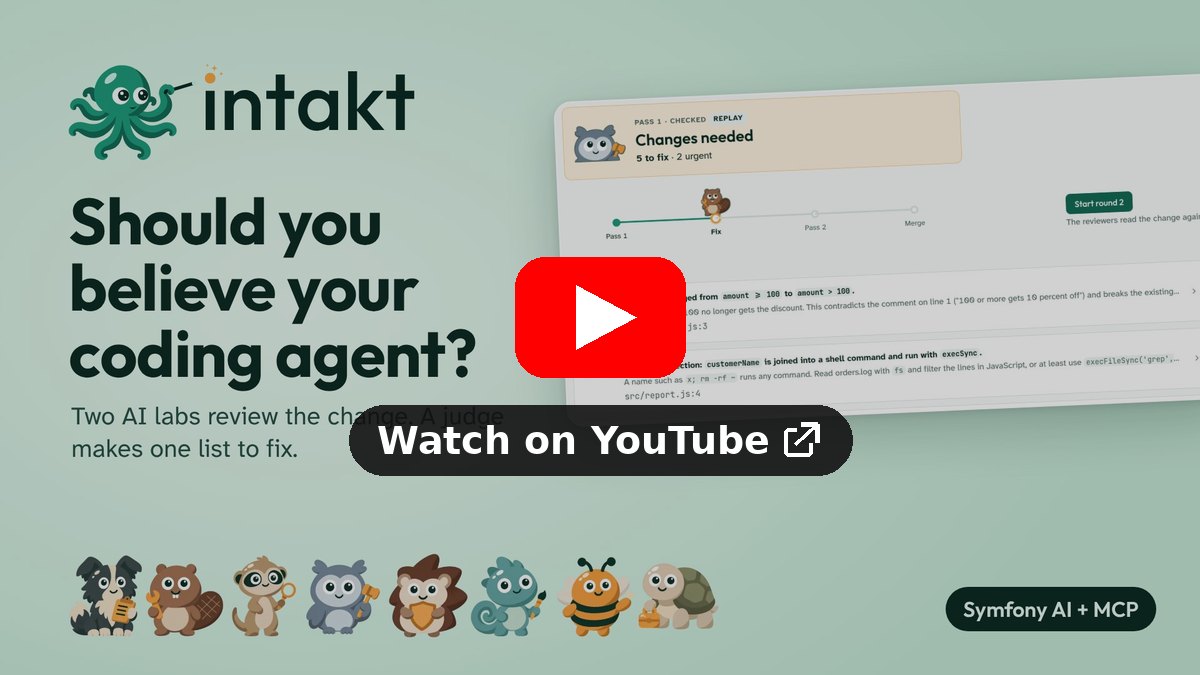
The 90-second Intakt video I submitted. It plays on YouTube.
I had a rudimentary, self-built loop running that was building Intakt, with the intention of Intakt taking over as soon as it was able to. It’s been chugging away since the beginning of the hackathon. Unfortunately it was not able to complete the planned feature set in time, so it was submitted with what it completed.
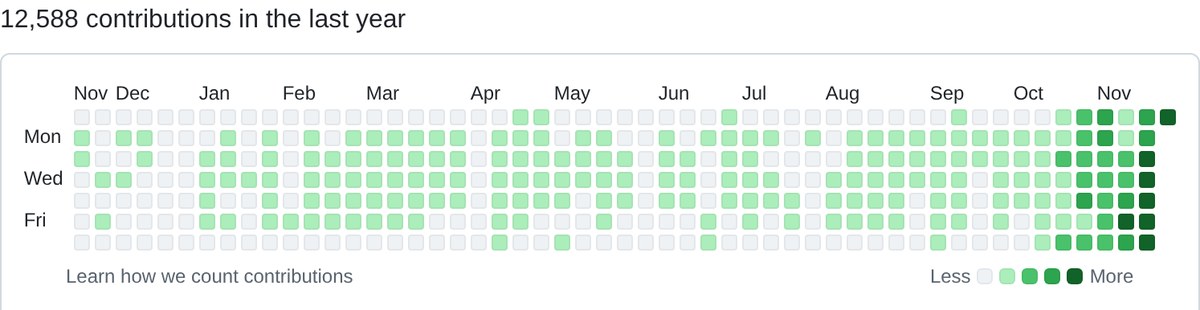
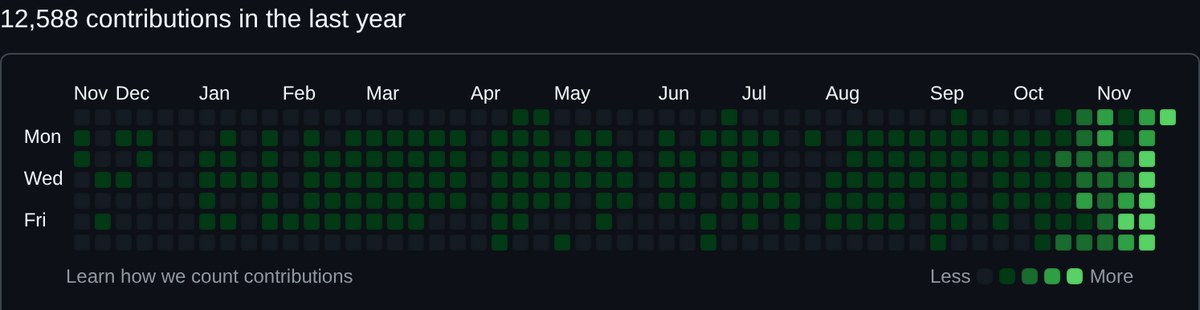
It cooked while I slept

So no, Intakt didn’t reach every goal I had set for the hackathon. The part where Intakt builds its own tasks is still on the plan.
But this is what my simple loop did finish in four weeks: a review panel with a judge, a live dashboard, MCP tools so your own agent can drive it, a recorded demo, a review bench, a public release, and documentation for all of it.
More than 8,500 commits. Over 1,200 merged pull requests, and almost every one of them reviewed by two AI models before it landed. On its busiest day, the deadline itself, 89 pull requests were merged before submissions closed.
By hand, alone, next to everything else in my life, that would have taken me a year. Probably more.
This was a side project. I worked on it in my spare time, in the evenings and on weekends. The only one working on Intakt full time was the AI. Day and night, while I was sleeping, at work, or cooking dinner. My job was to keep the kitchen running: give it good ingredients, taste what came out, and fix the process when something went wrong.
I might not have programmed one line of code for Intakt, but my learnings came from optimizing and fine-tuning the host of processes involved instead.
That leaves one question. I didn’t write this code, and there is far more of it than I can read. So can I trust what it built?
The answer takes two more parts. It starts with the first three days, and 784 things the reviewers found wrong.
Next, in part 2: the recipe and the kitchen.