
The recipe and the kitchen
Four weeks without writing code, and what it took to trust what the AI built: two reviewers, smaller tasks, faster CI and rules the AI can't change.

, 6 min read
Part 2 of 3 in the series Building Intakt with AI

I went to bed, and in the morning several pull requests had been created and were being worked on. It was awesome to see. I didn’t know what to expect, so I started reviewing the process straight away. In the first three days the reviewers raised more than 500 findings, and one change needed 14 review rounds. There was a lot of room for improvement.
Part 1 ended with a question: can I trust what the AI built when I didn’t write the code myself? Those first three days showed me I can’t trust the AI’s first try. I needed a kitchen I could trust instead, where everything is tasted before it leaves.
In June I wrote that if one model writes the code and another approves it, no human did. Seeing as the code and review quality of the AI vendors keeps improving with every new frontier model, it was time to see how far a loop that runs and improves itself can really go.
Two tasters

For me it didn’t make sense to have the model that built the code also review its own work. My loop had two reviewers from two different labs, Claude and GPT, and from the second week on both looked at every change.
As two reviewers cost more than one, I checked if both were really needed. After the first week they disagreed on almost a third of what they reviewed, and when we later planted five defects on our review bench, together they caught all five every time. Two different models review better than one, so both stayed.
Now and then the reviewers also hallucinated and reported problems in code that wasn’t part of the change. To filter those out, a simple script, not an AI, now checks every finding against the actual change first. Only the findings that hold up go to a judge, which merges both reviews into one list of things to fix. Still, reading source code alone can’t give the quality a review should have. For that, the change has to run on a real installation, and the reviewers have to look at what actually happens.
Small portions
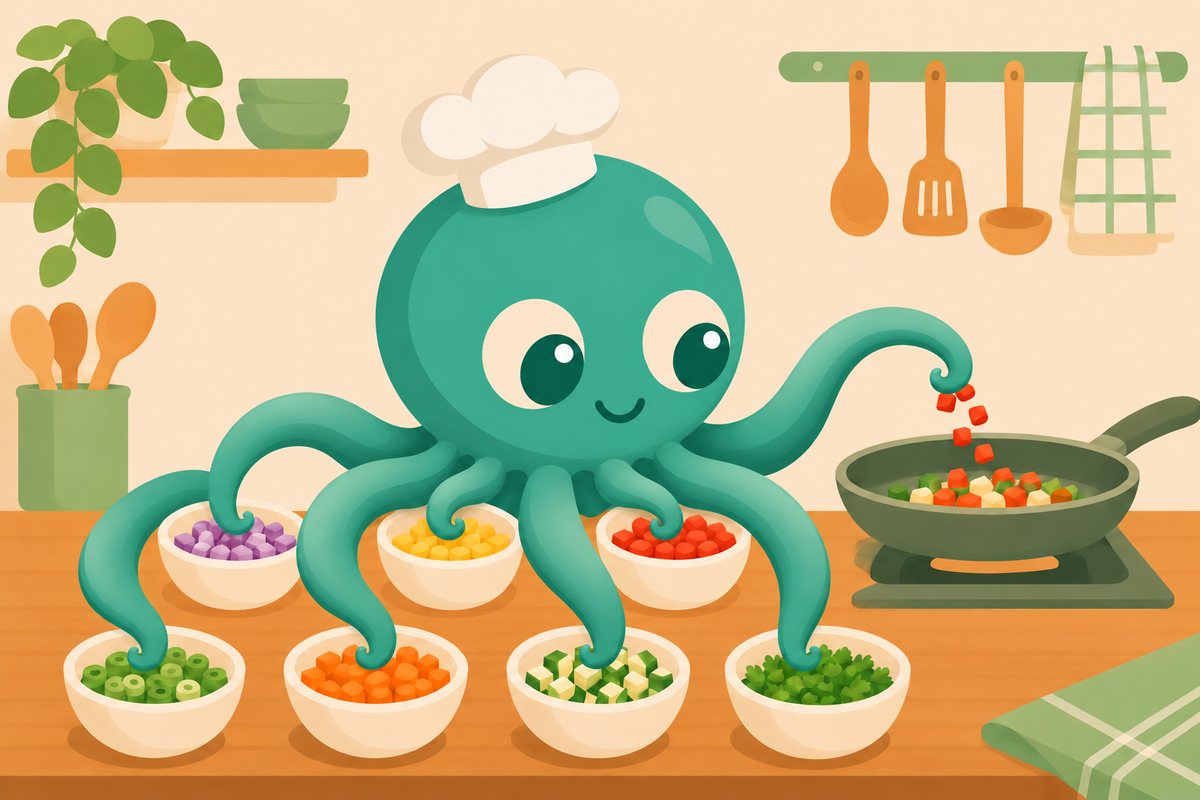
Tasks that were too big kept running into the limits we had defined or came back so big that no reviewer could read them properly. Fixing a problem after a merge also cost almost seven times as much as fixing it before, so we kept cutting the work into smaller portions.
Choosing the right model for each step helped as well. Opus is the better planner, and Sonnet is a capable builder when it follows a plan. When Opus did both the planning and the building, 59% of tasks were finished on the first attempt. When Opus wrote the plan and Sonnet did the building, 74% were, using about a third of the tokens.
The plumbing
The loop started with one builder and one reviewer, and every time I saw capacity going unused, I added more. A second builder came on the first day. When about half a week of an AI subscription went unused, a third one followed, and the loop learned to pick whichever subscription had the most room left. In the last days before the deadline up to 14 builders could work at once.
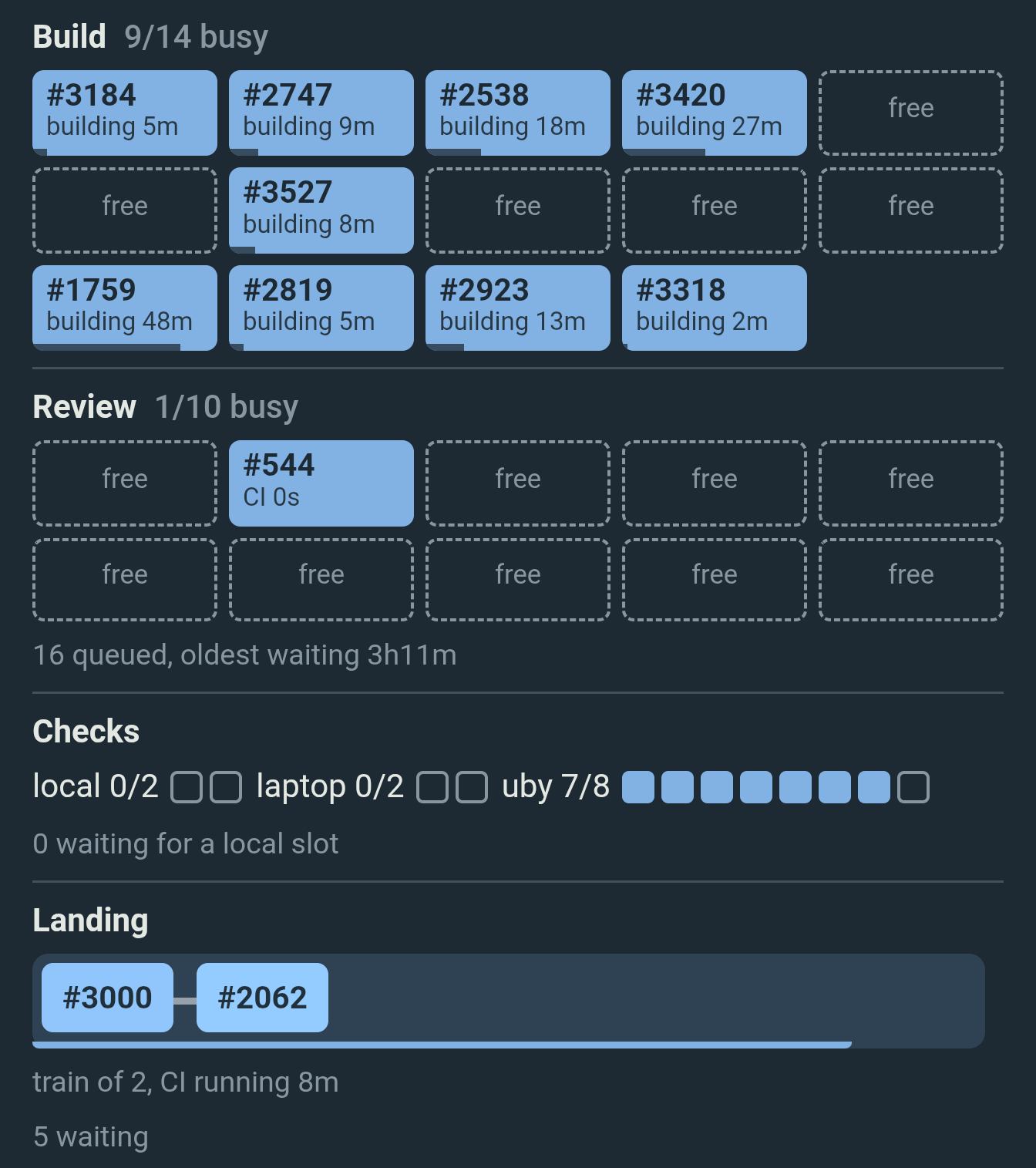
My rudimentary loop’s dashboard with 9 of its 14 builders at work.
I wanted to speed up development even more, and found that the slowest part was CI. The number of tests the AI writes is amazing, but they can cripple development with long CI times. Every change has to pass the tests, static analysis, code style and security scans before it can land, and with that many builders the changes ended up waiting in line. So we made the checks run in parallel and only on what a change touches, and a spare PC and an old laptop came out of the cupboard to help.
For more than a week CI also kept failing at random on what looked like a flaky test, and the AI couldn’t tell me which test it was. Our new CI runners started with an empty cache and downloaded 182 packages on every run until one of the downloads timed out. A cache fixed it in one evening. CI has to be monitored to be improved and optimized.
Who watches the chef?
So what stops an AI working on its own from wrecking everything? The rules defined in CI.
Whenever the reviewers kept pointing out the same problem, I turned it into a check that fails the build. By the end of the hackathon CI ran more than 20 checks on every change next to the tests, with 30 code rules of our own. In those four weeks the checks failed 457 CI runs, most often because of a test. These are some of the others:
- The code stays on the newest PHP 8.5 style.
- Static analysis with our own rules, like private helpers below the method that calls them and at most three parameters per method.
- Comments say why, not what.
- Commit subjects in one format, at most 100 characters.
- One code style everywhere.
- No libraries with known security problems.
- No secrets in the code or the git history.
- No long dashes in any text, because I don’t use them.
The AI can’t change the checks, the CI setup or the rules on its own. Every change to them has to be approved, and approved again if the AI changes anything after that. A script decides whether something merges, not an AI. It only looks at the reviews and the CI results.
During those four weeks I didn’t write any code. Most nights I checked the status, questioned what I saw on GitHub and approved what was waiting. By the last week I trusted the kitchen enough to sleep well. Then on the last day, we installed Intakt on a clean machine the way a juror would, and shockingly found what hundreds of green tests had missed.
That’s part 3: the bugs we found in our ingredients, the last day before the deadline, and how the hackathon turned out.